
B2B Web Design · 6 min
B2B Website Redesign Checklist: A Strategic Framework
Use this B2B website redesign checklist to align buyer journeys, positioning, content, SEO, conversion paths and technical requirements before rebuilding your site.
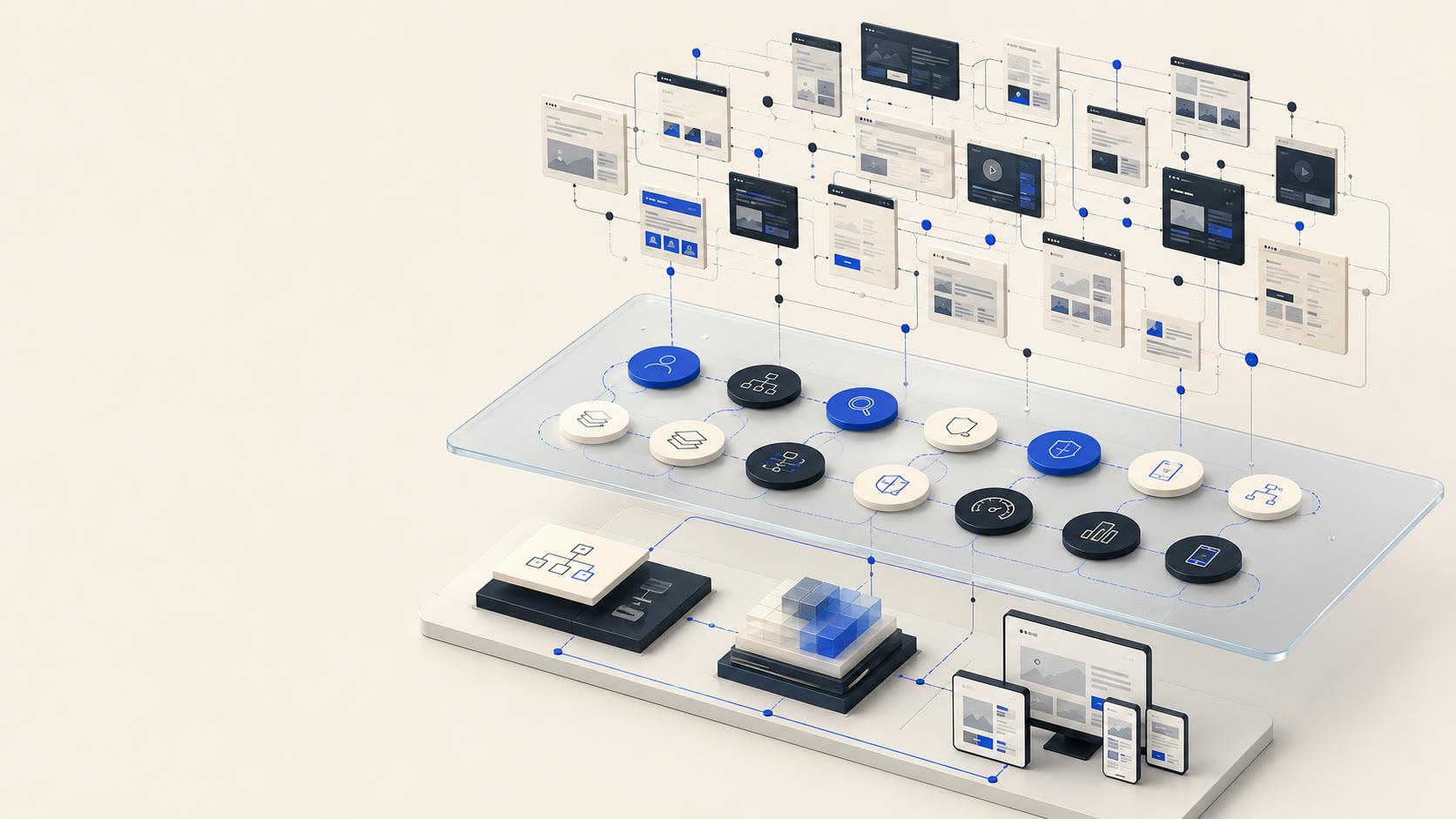
B2B website redesign checklist
A B2B website redesign should do more than make an existing site look current. It should make the commercial case clearer: who the business helps, what it delivers, why it is credible and what a prospective buyer should do next. This checklist sets out the strategic work to complete before a new sitemap, visual system or line of code is approved.
The objective is not to add pages for the sake of it. It is to build a website architecture around real buyer questions, commercial search intent and the information a sales conversation repeatedly needs. When those foundations are clear, design, content, SEO and lead generation reinforce one another instead of competing for attention.
1. Define what the B2B website redesign needs to change
Start with the business problem, not the homepage. A redesign may need to improve lead quality, explain a complex offer, support international growth, reduce dependence on sales presentations, consolidate duplicated content or protect organic visibility during a platform change. Choose the few outcomes that matter most, then define how progress will be measured.
Useful measures might include qualified enquiries, service-page conversions, organic visits to high-intent pages, the time sales spends explaining core capabilities, or the percentage of enquiries that contain the information needed for a first conversation. A clear brief prevents the project being judged only by subjective preferences after launch.
2. Map the buying decision before creating the sitemap
B2B buying journeys rarely move in a straight line. A prospective customer may discover a problem, compare options, check technical fit, seek proof, involve colleagues and only then make contact. The website should support those decisions with the right page types and internal links, rather than relying on one general overview page to answer every question.
- What does the buyer need to understand first?
- Which questions are repeated in sales calls?
- What evidence reduces perceived risk?
- Which stakeholders need different levels of detail?
- What is the most sensible next step at each stage?
3. Clarify positioning before polishing page copy
Visitors should be able to understand the audience, offer and outcome without decoding broad claims such as “innovative solutions”. A strong positioning statement connects a specific capability to a defined commercial need. It gives the homepage, service pages, case studies and calls to action one consistent message.
For example, “B2B web design and SEO for technical manufacturers” is more useful than a generic promise of digital excellence. It helps the right visitor self-qualify, makes search relevance easier to establish and gives sales a clearer starting point. Test the language against the terms customers, prospects and technical teams actually use.
4. Rebuild information architecture around buyer intent
A B2B website architecture should separate distinct commercial needs. Core services, industries, capabilities, use cases, technical information, proof and resources often deserve their own crawlable destinations. The right structure lets visitors enter through a page close to their need and then move naturally towards related evidence or a conversation.
Assign a primary search intent to every important page before writing it. Informational resources can answer early-stage questions; service pages can explain fit, scope and delivery; comparison or technical pages can help evaluators reduce risk. Avoid creating several pages that compete for the same vague query. Each URL should have a clear job for both the buyer and search engine.
5. Audit content and proof before migrating it
Content migration is a strategic decision, not a copy-and-paste task. Inventory existing pages, articles, PDFs and campaign assets, then decide whether each item should be kept, improved, merged, redirected or removed. Give extra attention to pages with organic traffic, backlinks, sales value or technically important information.
Proof belongs in the architecture too. Case studies, project examples, certifications, delivery processes, expert explanations and realistic outcomes should appear where a buyer needs reassurance—not only on a single testimonials page. Do not invent results or use logos without permission. Specific, verifiable detail creates stronger trust than vague superlatives.
6. Plan SEO before URLs and templates are final
SEO should guide the redesign from the beginning. Confirm the target keyword and intent for each key page, keep the URL structure understandable and map every legacy URL to its most relevant future destination. Where a URL changes, implement a permanent server-side redirect and update internal links, canonical tags and sitemap entries to the final page.
A pre-launch SEO review should also cover unique page titles and meta descriptions, one clear H1, semantic heading order, useful internal links, indexation rules, mobile performance and structured data. For multilingual websites, each language version should have an equivalent page where appropriate, accurate hreflang relationships and market-relevant copy rather than automatic duplication.
7. Design conversion paths around intent
Not every visitor is ready to request a proposal. Make the next appropriate action obvious: explore a relevant service, review a case study, download technical information or book an initial conversation. A primary CTA should reflect the page's purpose and should not be diluted by a row of competing actions.
Forms should request only the information that helps the team respond well. In many B2B contexts, a name, company, email and concise project summary are sufficient for first contact. Define ownership, response timing and CRM routing before launch so that a well-designed enquiry path leads to a reliable commercial follow-up.
8. Set technical, accessibility and CMS requirements early
Visual ambition should operate within clear performance, accessibility and publishing constraints. Meaningful images need appropriate alt text, interactions must work by keyboard, contrast and focus states must be usable, and pages must remain readable on smaller screens. Test the real content, forms and navigation—not only static mock-ups.
The CMS should make the correct patterns easy to maintain: service pages with consistent fields, resource templates with SEO metadata, image controls, internal linking and governance for language versions. If editors have to bypass the system to publish a useful page, content quality and technical consistency will degrade after launch.
9. Validate the launch as one connected system
A redesign is ready when content, SEO, measurement and the commercial journey work together. Crawl the staging site, verify redirect mappings, test forms and analytics, review canonical and hreflang logic, and check that the production sitemap contains only canonical URLs. Then monitor search performance, crawl issues, form submissions and user behaviour after launch.
- Buyer journeys and page roles are defined.
- Positioning, service architecture and proof are clear.
- Content migration and old-to-new URL mapping are complete.
- Metadata, canonicals, hreflang, structured data and the sitemap are validated.
- Forms, CRM routing, analytics, accessibility and performance are tested.
When should a B2B website be redesigned?
A redesign is appropriate when the current website no longer represents the offer, prevents buyers from finding the right information, creates friction in the enquiry process or cannot support content and technical SEO requirements. If the foundations are weak, a deeper rebuild may be more effective than a visual refresh.
Will a website redesign hurt SEO?
It can if URL changes, internal links, canonical tags, content migration and redirects are not managed carefully. A planned migration protects valuable equity by mapping old URLs to relevant new pages, retaining useful content and validating technical signals before launch.
How long does a B2B website redesign take?
The timeline depends on scope, content readiness, integrations, languages and approval processes. The discovery and architecture stages are not overhead: they reduce rework and make the build phase more predictable.
A strategic redesign creates a website that is easier to understand, easier to find and easier to use in a real sales process. If you are planning a new B2B website, explore our B2B web design service to see how strategy, content, SEO and delivery can be planned as one system.
Related guide
Before changing an existing site, understand the scope and budget factors involved.