
Web Design · 10 min
How Much Does a Business Website Cost in 2026?
A practical 2026 guide to business website costs in the UK and US, including the factors that change pricing, common budget ranges, and what to include in your brief.
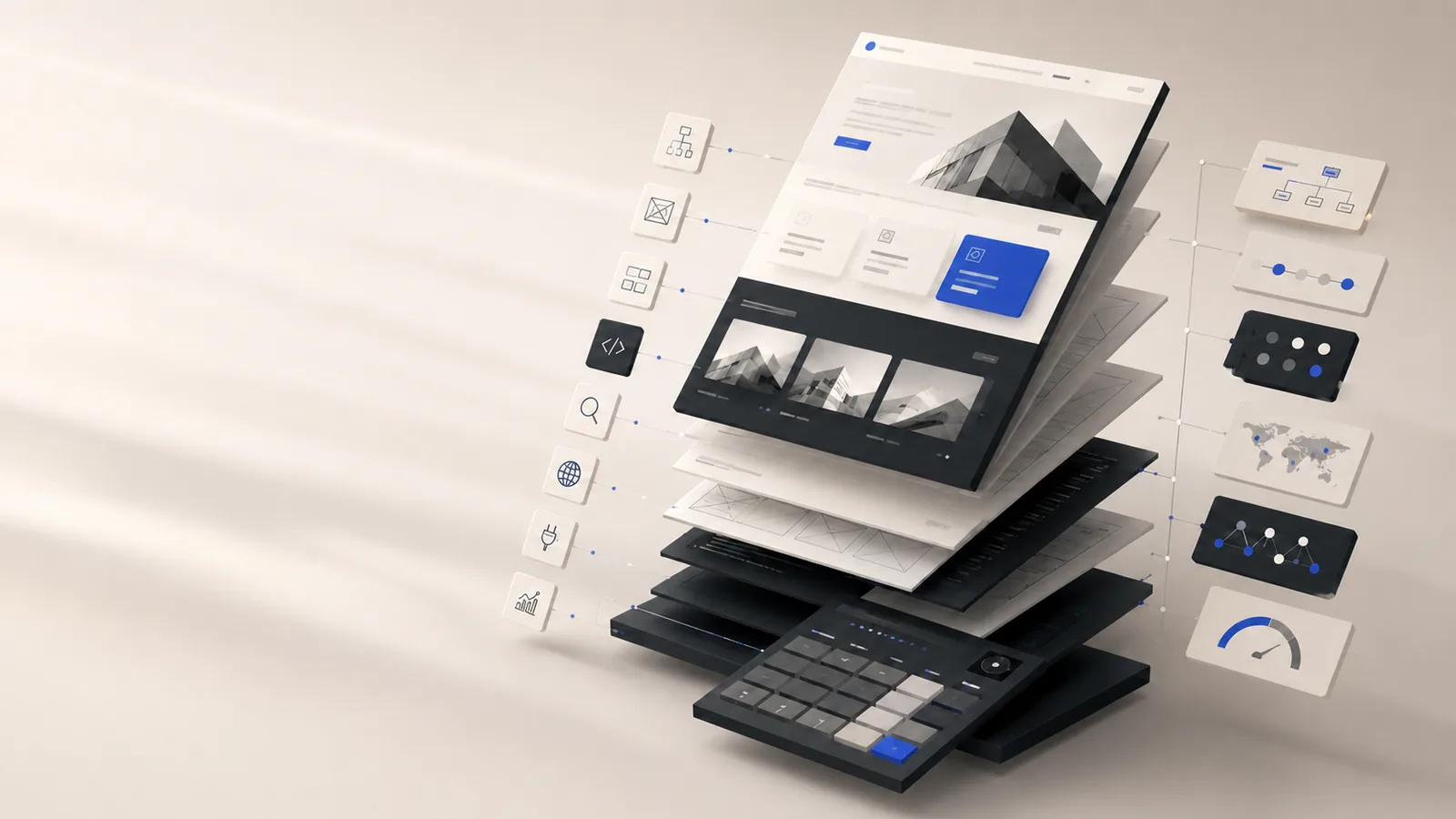
A business website can cost a few thousand pounds or dollars, or it can become a six-figure digital project. The difference is rarely just the number of pages.
What you are really paying for is the scope behind those pages: research, information architecture, custom design, development, content migration, SEO foundations, integrations, multilingual support, testing and the level of ongoing support required after launch.
Professional business website projects can range from a few thousand to tens of thousands of pounds or dollars, depending on the scope, delivery model and technical requirements. Agency-led custom projects typically sit higher than template-based or freelancer-led builds, while multilingual, ecommerce and integration-heavy sites can move well beyond a standard marketing-site budget.
The useful question is therefore not simply "How much does a website cost?"
It is:
"What does our business need the website to do?"
This guide explains the main cost ranges, what changes the price, where businesses often overspend or underspend, and how to prepare a brief that leads to a more accurate quote.
Business website cost ranges in 2026
There is no universal website price list, but current agency-market data gives a useful frame of reference.
Clutch's August 2026 web design pricing data shows a very wide market, with agency web design projects ranging from roughly $2,000 to $100,000, depending on scope. Its UK agency data places a basic 5–10 page marketing website around £5,000–£15,000, a mid-sized corporate website around £15,000–£40,000, and custom ecommerce or web-app work at £40,000–£120,000+.
These are indicative market benchmarks, not Clarion Flow price packages. Actual project costs depend on scope, complexity, integrations, content requirements, team structure and delivery model.
A more useful way to think about the market is by project type.
Indicative 2026 market budget ranges
| Project type | Typical scope | UK market planning range | US market planning range |
|---|---|---|---|
| Lean business website | Small marketing site, limited templates, simple CMS, no complex integrations | £5k–£15k | $5k–$15k |
| Custom B2B or corporate website | Discovery, custom UX/UI, multiple page types, CMS, stronger conversion and SEO foundations | £15k–£40k | $15k–$50k |
| Multilingual or integration-heavy website | Multiple locales, localisation, CRM/ERP integrations, complex content structure, custom components | £25k–£60k+ | $30k–$75k+ |
| Ecommerce or custom web platform | Product/catalogue logic, payments, accounts, integrations, custom workflows or application functionality | £40k–£120k+ | $50k–$150k+ |
The UK and US figures are separate market-planning benchmarks, not exchange-rate equivalents. A real proposal can sit below or above these ranges depending on the project.
These bands overlap because two websites with the same page count can have completely different technical and commercial requirements.
A 20-page brochure site with a standard CMS is not the same project as a 20-page multilingual B2B site with product data, CRM integration, lead routing and a custom enquiry workflow.
What actually changes the cost of a website?
1. Strategy and discovery
A lower-cost project often begins with a list of pages and moves directly into design.
A more considered project may begin with:
- stakeholder interviews
- competitor review
- audience and buyer-journey analysis
- content inventory
- conversion goals
- technical requirements
- analytics review
- SEO and search-intent mapping
This work adds cost at the beginning, but it reduces expensive changes later.
For a B2B website in particular, discovery can determine whether the site becomes a useful sales asset or simply a polished online brochure.
If your website needs to support a long sales cycle, technical buyers or multiple decision makers, see our approach to B2B web design.
2. Number of unique page types
Page count matters, but unique layouts matter more.
A 40-page website may only need six reusable templates:
- homepage
- service page
- sector page
- case study
- guide/article
- contact page
By contrast, a 15-page website might contain ten completely different page types with custom behaviour.
When comparing quotes, ask how many unique templates or components are included rather than focusing only on the total number of pages.
3. Custom design versus a pre-built theme
Using an existing theme or template can reduce both design and development time.
That can be completely reasonable for a small business whose needs are simple.
Custom design costs more because the team is creating:
- a visual system
- responsive layouts
- reusable interface components
- interaction patterns
- typography hierarchy
- navigation behaviour
- page-specific conversion paths
The value of custom design is not that every element looks unusual. Good custom design makes the site feel specific to the business and easier for users to understand.
4. Copywriting and content work
Content is one of the most underestimated parts of a website project.
A redesign may require:
- rewriting service pages
- restructuring long-form content
- creating new sector pages
- migrating old articles
- editing technical material
- sourcing images
- preparing case studies
- creating multilingual versions
A site can be technically ready while the launch remains blocked for weeks because the content was never planned.
Clarify early whether the quote includes:
- copywriting
- editing
- content entry
- content migration
- image preparation
- translation or localisation
5. SEO foundations
A website build and an ongoing SEO programme are not the same thing.
A well-built business website should normally include technical foundations such as:
- crawlable navigation
- sensible URL structure
- title and metadata controls
- canonical handling
- sitemap generation
- redirect planning
- structured content
- mobile responsiveness
- performance optimisation
- basic structured data where appropriate
But ongoing SEO services may also include keyword research, content strategy, technical audits, link acquisition, content production and continuous performance work.
If one agency says "SEO included" and another charges separately, check what each one actually means.
6. Multilingual requirements
A multilingual website is more than a language dropdown.
A properly structured international website may require:
- locale-specific URLs
- hreflang
- translated metadata
- content localisation
- RTL support for Arabic
- language-aware navigation
- localised forms
- localised images or calls to action
- independent indexing controls
The complexity increases further when different markets need different services or content rather than literal translations.
For international projects, see multilingual website development.
7. CMS and editing experience
A content management system can be simple or highly customised.
Cost increases when editors need structured controls for:
- services
- locations
- industries
- team members
- case studies
- product catalogues
- technical specifications
- multiple languages
- reusable campaign pages
The best CMS is not necessarily the one with the most features. It is the one your team can operate safely without constantly asking a developer to make routine updates.
8. Integrations
Integrations are one of the fastest ways for a website project to move from a straightforward marketing build into custom development.
Examples include:
- CRM
- ERP
- booking systems
- payment providers
- product databases
- inventory
- email platforms
- authentication
- customer portals
- analytics platforms
- marketing automation
- third-party APIs
A basic contact form that sends an email is inexpensive.
A form that validates data, identifies the lead type, routes the enquiry to a salesperson, creates a CRM record and triggers an automation is a different system.
If your website needs significant bespoke workflows, it may overlap with custom software development.
9. Ecommerce functionality
Ecommerce pricing varies dramatically.
A relatively standard Shopify store with an existing catalogue is different from a B2B ecommerce system with:
- account-specific pricing
- trade accounts
- ERP integration
- complex product variants
- approval workflows
- multiple currencies
- multiple languages
- customer-specific catalogues
The technology is only one part of the budget. Product information, migration and integrations can be equally significant.
10. Accessibility, performance and QA
Testing is easy to underestimate because much of it happens after the visible design work is finished.
A professional launch process may cover:
- responsive behaviour
- multiple browsers
- keyboard navigation
- forms
- error states
- redirects
- metadata
- structured data
- analytics
- performance
- accessibility
- CMS permissions
- third-party integrations
Reducing QA can make a quote look cheaper while moving risk to the launch.
Why can two agencies quote completely different prices?
Because they may not be quoting the same project.
One proposal may include:
- strategy
- custom UX/UI
- copy support
- development
- CMS
- SEO foundations
- migration
- QA
- analytics
- training
- launch support
Another may include:
- five page templates
- a theme
- development
- basic content entry
Both can legitimately be called "website design and development."
The right comparison is therefore not:
Agency A: £8,000 Agency B: £18,000
It is:
What is included, what is excluded, and what will we need to buy or build later?
Freelancer, small studio or agency?
The right model depends on the project.
Freelancer
Often suitable when:
- scope is small
- requirements are clear
- there is one primary discipline
- the client can handle project management internally
Small specialist studio
Often suitable when:
- you want senior people directly involved
- the site needs custom design
- scope is focused
- you prefer a smaller project team
Multidisciplinary agency
Often suitable when the project needs several capabilities together:
- strategy
- UX/UI
- development
- SEO
- content
- integrations
- multilingual implementation
- analytics
- post-launch support
A larger team is not automatically better. What matters is whether the team matches the work.
What should be included in a professional website quote?
A useful proposal should make scope visible.
Look for clarity around:
- discovery and strategy
- sitemap and information architecture
- number of unique templates
- design rounds and revisions
- responsive development
- CMS implementation
- content responsibilities
- integrations
- SEO foundations
- analytics
- migration
- redirects
- testing and QA
- accessibility expectations
- training
- deployment
- post-launch support
- third-party licence or hosting costs
If something important is not mentioned, ask whether it is excluded.
Where should you save money?
You can often reduce cost safely by limiting:
- unnecessary animation
- excessive unique page templates
- custom functionality with no clear business value
- launch-day features that can wait for phase two
- duplicate content
- overly complicated CMS controls
You can also provide organised content and make decisions quickly. Delays and changing scope create real project cost.
Where is it risky to cut the budget?
Be careful about reducing investment in:
- information architecture
- mobile usability
- technical SEO
- redirects during a redesign
- accessibility basics
- QA
- security
- performance
- analytics
- integration testing
These are less visible than animation or branding, but they often have more impact on whether the website works after launch.
Should you publish your website budget before contacting an agency?
If you already have a realistic budget range, sharing it can be useful.
It helps the agency answer a better question:
"What is the strongest solution we can build within this budget?"
Without any budget context, the agency has to guess whether you are looking for a £5,000 website, a £30,000 website or a £100,000 platform.
A range is usually enough.
For example:
We are planning a £15,000–£25,000 budget and need a multilingual B2B website with approximately 25 pages, a CMS and HubSpot integration.
That is far easier to scope than:
We need a new website. How much?
How to get a more accurate website quote
Before contacting an agency, prepare these seven things:
1. What the website needs to achieve
Examples:
- generate qualified leads
- support sales conversations
- sell products
- enter a new market
- support international buyers
- reduce manual enquiries
- improve recruitment
- replace an outdated website
2. Your approximate sitemap
It does not need to be final.
A rough list of pages and content types is enough to expose the scale.
3. Required functionality
Separate:
must-have
from:
nice-to-have
This is one of the easiest ways to control budget.
4. Integrations
List every system the website may need to connect to.
5. Languages and markets
State whether each language is a direct translation or requires market-specific content.
6. Content responsibility
Decide who will write, translate, migrate and approve the content.
7. Budget and target launch date
A realistic budget and timeline allow the agency to propose the right approach instead of designing an imaginary project.
A cheap website can be expensive
The cheapest initial quote does not always create the lowest total cost.
A business can spend less at launch and then pay again for:
- rebuilding poor templates
- fixing mobile layouts
- repairing SEO migration mistakes
- adding missing CMS functionality
- rebuilding integrations
- improving performance
- moving away from a restrictive platform
The opposite is also true. A business can overspend on custom design and functionality it does not need.
The aim is not to buy the cheapest or most expensive website.
It is to invest at the level justified by the commercial job the website needs to perform.
How Clarion Flow approaches website scoping
We start with the business requirement rather than a fixed page package.
That usually means understanding:
- who needs to use the website
- what should happen after a visitor arrives
- which pages and content types are actually required
- whether SEO needs to influence the architecture
- which systems need to connect
- whether multiple languages or markets are involved
- what your team needs to manage after launch
From there, the project can be scoped around the smallest sensible solution rather than unnecessary features.
If you are planning a new site or redesign, explore our web design and development services.
Frequently asked questions
How much does a small business website cost in 2026?
A professionally delivered small business website can range from a few thousand to tens of thousands of pounds or dollars. Template-led or tightly scoped projects can sit at the lower end, while custom B2B, multilingual, ecommerce and integration-heavy projects typically require larger budgets.
How much does a 10-page website cost?
Page count alone is not enough to price a project. A 10-page website using a few reusable layouts can be relatively simple. Ten highly customised pages with integrations, interactive components and bespoke content can cost much more.
Why do agency websites cost more than DIY website builders?
An agency project can include strategy, UX, custom design, development, testing, technical SEO, migration and integration work. A website builder primarily provides the platform and templates. They solve different problems.
Is SEO included in web design?
Technical SEO foundations should be considered during a professional website build, but ongoing SEO is normally a separate scope. Ask exactly what the agency includes when it says "SEO."
How much does a multilingual website cost?
Multilingual projects usually cost more because they introduce additional content, localisation, URL architecture, hreflang, translation workflows and QA. The increase depends on how many markets and languages are involved and whether each market needs unique content.
Should I choose WordPress, Webflow, Shopify or a custom build based on price?
Price matters, but the platform should follow the requirements. Choose based on editing needs, ecommerce requirements, integrations, flexibility, scalability and ownership rather than the cheapest initial build.
How long does a business website take to build?
A focused business site can take weeks, while larger corporate, multilingual and integration-heavy projects can take several months. Content readiness and approval speed often affect the timeline as much as development.
How can I get a more accurate website quote?
Provide your goals, approximate sitemap, functionality, integrations, languages, content responsibilities, budget range and desired launch date. Clear scope produces more useful proposals.
---
Sources and methodology
Market ranges in this guide were checked against current 2026 agency pricing data, including Clutch's August 2026 Web Design Company Pricing Guide and its UK web design agency pricing data. Individual projects can sit below or above those ranges depending on scope, location, team structure and technical complexity.
This guide is intended for budget planning only. The figures above are broad market benchmarks and are not Clarion Flow packages, minimum fees or fixed prices. A Clarion Flow proposal is scoped individually around the work required.
Clutch — Web Design Company Pricing Guide (August 2026)Clutch — UK Web Design Agency Pricing (August 2026)